Sunday, September 2, 2012

Bill Nye Explains Why Kids Need to Know About Evolution


One common theme in the never-ending discussion of Creationism versus evolution is "Why not teach both and let kids make up their own minds?"

The problem with that line of thinking -- leaving aside the fact that Creationism is usually understood to mean the creation story of one particular culture, rather than a comparison of the many, many traditions of how the world began -- is that when it comes to evolution, both sides are just not equal. In order to believe in Creationism in a literal sense, you have to unbelieve practically every big idea to be embraced by science in the last century. This is the argument Bill Nye makes in the video above:
Your world just becomes fantastically complicated when you don't believe in evolution. I mean, here are these ancient dinosaur bones or fossils, here is radioactivity, here are distant stars that are just like our star but they're at a different point in their lifecycle. The idea of deep time, of this billions of years, explains so much of the world around us. If you try to ignore that, your world view just becomes crazy, just untenable, itself inconsistent.
The Science Guy goes on to plead with parents not to make their children deny evolution "because we need them. We need scientifically literate voters and taxpayers for the future. We need people that can ... build stuff, solve problems."

The video comes from a website called Big Think. Thanks to its sensationalist title -- Bill Nye himself talks only about "denying evolution" and makes no comment on people's personal beliefs -- the video has gotten over 3.5 million hits since it was posted on August 23, a little over a week ago. It has been mentioned on news sites around the internet, and Nye went on CBS and CNN to clarify his views.

As he says, "Learning the story is great, but it's not science."


Saturday, June 16, 2012

Geneticist Barbara McClintock

If you're wondering why this blog looks a little neglected, the reason is that GeekMom has been keeping me busy. I hope to post some more about recent chemistry projects we've done, but in the meantime I'd like to highlight a wonderful post by GeekMom writer Melissa Wiley about Barbara McClintock. As Melissa writes:

Attention science buffs: Edith Hope Fine’s biography of groundbreaking geneticist Barbara McClintock (1902-1992) is available free on Kindle this weekend, June 16-17, 2012! As we mentioned back in April, Barbara McClintock: Nobel Prize Geneticist is a lively biography for readers nine and up, illuminating the life and work of this remarkable scientist. Dr. McClintock won the Nobel Prize in 1983 for her discovery of “jumping genes,” small pieces of DNA can move from one place to another in a genome. She conducted most of her research on maize, working with crops she raised herself.
You can read Melissa's interview with the author, Edith Hope Fine, on GeekMom. Her post includes links to other posts about science and some science activities, including one that originally appeared on my other blog Home Chemistry!

Thursday, December 23, 2010

More Home Biology Sightings in the News


If you didn't get to see the nice picture of the kids and me playing with our computer microscope for the New York Times (the photos are not on the NYT website), here's a reprint of the article in the Minneapolis Star-Tribune.

Wednesday, December 15, 2010

Welcome New York Times Readers!


It was a thrill to be featured in the article about our computer microscope in the New York Times Business section. Home Biology is where my two teens and I kept records of all the activities we did and resources we found in the course of a year of homeschooling biology. In the sidebar on the right you'll find lots, conveniently arranged by topic.

Despite the description in the Times, we don't really have a lab in our dining room. And the computer microscope described in the article is about the most sophisticated piece of science equipment we use. But we can tell you a lot about studying living things with kids at home using low-tech and inexpensive equipment. If you look at the Topic Labels in the sidebar, you can find posts about our forays into microphotography using a standard student microscope (which has a higher magnification than the computer model) and my digital point-and-shoot camera. There are also lots of posts about our "labs" (perhaps not what a traditional high school biology lab would look like, but a hands-on activity that got my kids thinking and doing science). I also labeled some activities kitchen biology because they involve food. Those were my favorites!

I'd love to hear what you think about our activities and our blog. And if you're interested to see what we've done in other science areas, be sure to visit our other blogs: Home Chemistry, Home Physics, and this year's project, Integrated Science at Home. And anyone who's interested in ways to bring science and technology (as well as scifi, games, and all kinds of fun stuff) to kids should check out the other blogs I'm a member of, GeekMom and GeekDad.

You can also find information about activity books for kids and my school and library programs at my website Crafts for Learning. You'll find contact info there as well. Thanks for stopping by!


Tuesday, May 18, 2010

Saratoga Woods and Waterways

 Image: Jackie Donnelly

Back when we started this blog our first project was a nature survey. Although we managed to identify many species that were new to us, we were only scratching the surface.

I just discovered a blog by a local amateur naturalist Jackie Donnelly of Saratoga Springs, NY called Saratoga Woods and Waterways. It has wonderful photos and descriptions. Since the trails she mentions are all within a short drive, we'll have to check some out and see if we can find any of the plants and animals she identifies.

Saturday, May 8, 2010

More Triops -- and a Fairy Shrimp

We hatched some more triops recently and got a bonus -- a fairy shrimp. We brought our shrimp to the Schuylerville Library for a presentation on the activities from my new book Discover the Desert, which was just won an Honor Award from Skipping Stones Magazine. Unfortunately, the two triops passed on after only a few weeks, but the fairy shrimp (the kind that are sold as Sea Monkeys) is still going strong.You can see the fairy shrimp on the left in this photo.

I have had a very hard time getting nice photos of our shrimp. But if you want to see some crisp, clear excellent images of triops, the book Triops: A Very Unusual Creature is now available on Amazon.

Tuesday, April 27, 2010

Food, Inc.

I just discovered that the documentary Food, Inc. can now be watched online at the PBS website. From the PBS companion website:
In Food, Inc., filmmaker Robert Kenner lifts the veil on our nation's food industry, exposing the highly mechanized underbelly that's been hidden from the American consumer with the consent of our government's regulatory agencies, USDA and FDA. Our nation's food supply is now controlled by a handful of corporations that often put profit ahead of consumer health, the livelihood of the American farmer, the safety of workers and our own environment. We have bigger-breasted chickens, the perfect pork chop, insecticide-resistant soybean seeds, even tomatoes that won't go bad, but we also have new strains of E. coli — the harmful bacteria that causes illness for an estimated 73,000 Americans annually. We are riddled with widespread obesity, particularly among children, and an epidemic level of diabetes among adults.
Among the experts interviewed is Michael Pollan. Last year we listened to the audio version of his excellent, accessible book, In Defense of  Food.

I've had the DVD on reserve at the library forever (my request has already expired once), so I'm very glad to see that we can now watch it on demand. Now if we can only figure out how to stream video from the computer to our ancient TV...
Reblog this post [with Zemanta]

Wednesday, April 21, 2010

Stuffed Triops and other Fun Critters

Check out my GeekDad post about Weird Bug Lady, who makes adorable stuffed versions of triops, bugs, and other critters.

Thursday, February 18, 2010

A Cool Article on Aquaponics

 
Image: NYT
When we brought the goldfish in from the plastic pond in the backyard last fall, they had doubled in size. So we picked up a second tank to keep them in. Our tanks are self-contained: rocks, plants and fish in their own ecosystem, without filters. (We change half of the water and wipe the tank down every week.)

At one point we gave a thought to putting at least one of the 10-gallon tanks on the shelf by the back sliding door, where we had our hydroponic set-up last year, and trying to grow veggies on the top of it. We never followed through. (As a side note, for the first time in my experience the boxes of dirt-planted herbs I brought in last fall are still doing going strong indoors this winter.)

However, this New York Times story describes an aquaponic experiment very similar to what we were thinking about. Given how wet our property is, we don't need to grow in tanks year-round, but maybe we'll give it a try next winter.

Friday, December 4, 2009

Brain Slices


As I write this, you can watch live streaming video of a frozen brain being sliced into sections for study at the Brain Observatory at the University of California, San Diego. The brain belongs to a man who lost his short-term memory after an operation to help his seizures.

From CNN:

A camera is taking a picture of each individual slice, and these pictures will also be made available on the Web. The goals are to map the human brain in new ways and correlate individual structures with specific functions such as memory.


Tuesday, December 1, 2009

Nature Art -- Big and Small


I finally got the chance to interview (via email) local nature writer/illustrator Carol Coogan. Read "How to Get Your Kids Out Drawing Nature" on GeekDad.

And The Micropolitan Museum of Microscopic Art Forms is a website featuring images of teeny tiny organisms. Here's their description:
For several centuries artists have depicted the human figure, still-lives, landscapes or non-figurative motifs. One subject has been widely neglected all those years: Micro-organisms!

The Micropolitan Museum finally exhibits these often overlooked works of art which are only visible with the aid of the microscope. Curator Wim van Egmond has collected the finest microscopic masterpieces nature has ever produced during eons of natural selection.
Reblog this post [with Zemanta]

Sunday, November 8, 2009

Great Kids Book about Triops


Photographer Lori Adams sent me
a review copy of the new book she produced with author Helen Pashley about triops. This book is the reference you'll need when you try raising these frisky little critters for yourself. It has all the information you'll need, plus lots of clear, well-marked photos so you can identify what you're seeing. I recommend it highly. Order it through Little Science books.

You can also order triops kits through Amazon or directly from Triassic Triops (but I get a small kickback from Amazon, and shipping is free)!

See my post about triops on GeekDad. The comments are pretty funny, too.

Thursday, November 5, 2009

Charlie's Playhouse - Toys that Teach Evolution

Thanks to my fellow GeekDad writer Jenny for pointing me towards Charlie's Playhouse, a toy company dedicated to games and learning tools about evolution. As Jenny writes:

The 24th of November is the 150th anniversary of the publication of Charles Darwin’s work, “On the Origin of Species by Means of Natural Selection, or the Preservation of Favoured Races in the Struggle for Life.” To celebrate this important anniversary, Charlie’s Playhouse, maker of evolution-inspired toys, play things and apparel, is inviting us all to ask our kids (age 4 to 10), “What is evolution?” They are hoping this will spark family discussion about evolution.


Friday, October 30, 2009

How Did Our Garden Grow?

Corn and Beans

This year's garden was eventful, and deserves a report:

1. The Three Sisters Garden worked great!

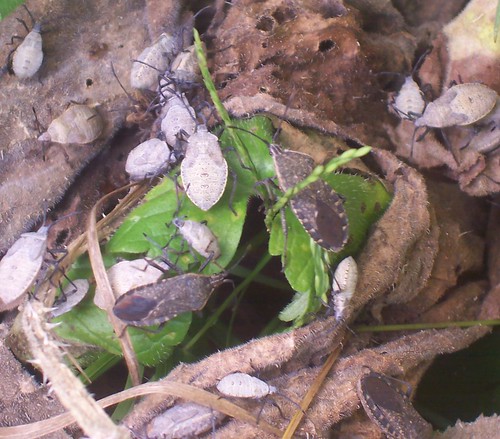
Following the directions from NativeTech, I planted corn, stringbeans and various kinds of squash Native American-style. We had way more corn than the previous year (although several ears never developed), and the beans were plentiful up until the first frost. In fact, the beans grew so well that the corn stalks began bending under the weight and had to propped up with stakes taken from the tomato patch (more on which below). I also got a lot of acorn squash (reminder to self: make menus to use up acorn squash in downstairs fridge) and a few zucchinis. I even got two pickings of pickles from the one vine that grew over by the compost pile. But most of the squash didn't thrive. Possible reasons: planted seeds too deep, critters ate seeds, powdery mildew, squash bugs. But all in all relatively easy and very rewarding. (Note for next year: deepen lower plot to move corn farther away from fence.)

2. Those poor tomatoes.

Tomatoes throughout the area had it rough this year. Tomato blight arrived early, thanks to plants shipped to the big-box stores. Although experts recommended pulling up all plants and discarding them, I kept a few which still had leaves and found that by the end of the season they each had produced several more small fruits (which I failed to harvest before the frost, sadly). The other weird thing was that somehow I ended up without a single regular round red tomato among all my varieties. And due to a mistake on the part of the farmer's market guy, the green zebra seedlings I bought turned out to be orange globes (which the husband pronounced unsuitable for sandwiches, for some reason). Not a total washout, not a great year.

3. What happened to all the pumpkins?

Last year we had pumpkins up the wazoo, just from throwing our old ones on the compost pile. This year, nada. Still had vines -- but they turned out to be plain little gourds, barely suitable for decorations. Went to our usual pumpkin place (across from the dairy farm we lived on years ago) to stock up, and the girl there said all the wet weather was not pumpkin-friendly. Well, there's always next year.

4. The herbs, the strawberries, the grapes, the apples.

The herb garden we created at our last house was so wonderful, I figured it would be easy to replicate. But so far, no luck. Even though herbs are billed as being suitable for shady spots, ours have not filled out. And with the non-stop rain, everything growing in the lower part of the backyard was pretty much drenched, if not underwater, throughout the entire season. I added some more ever-bearing strawberries, which turned out to have much larger fruit than the first batch (about half the size of a regular strawberry, as opposed to little wild-strawberry-sized fruit). They only produced a few, and sometimes the bunnies got to them before I did. I'd like to add more of those next spring. Of the two grape plants I put in by the pond, one died and the other survived but didn't fruit. The apple tree produced about a dozen apples, of which the squirrels got two. All were bumpy and funny-looking, but were OK when peeled and cooked.

Winter gardening: I still need to pull out the old plants and cut what herbs remain for drying. The carrots I planted in September seem to be doing OK; I plan to cover them and see if they are pickable in the winter. I also planted some lettuce in flower boxes on the porch rail, but the squirrels decided they were the perfect place to bury nuts.

Not sure about doing any hydroponics other than sprouts this winter, but I may try to grow something in one of the fish tanks. Still looking into it! Also hope to try some of the projects in Fresh Food from Small Spaces: The Square-Inch Gardener's Guide to Year-Round Growing, Fermenting, and Sprouting.

Sunday, October 4, 2009

New Blog - Home Physics!

It'll be a few more weeks before it really gets up and going, but I'm starting to add helpful links and info about learning physics at home to this year's science blog, Home Physics. Come visit! And feel free to comment with your favorite resources or suggestions.

Tuesday, September 29, 2009

Nature Drawing


I don't think I ever posted these drawings of tomato plants by my kids last winter. We have been inspired by the lovely illustrations of naturalist Carol Coogan, whose work is published weekly in our local newspaper.


Monday, August 31, 2009

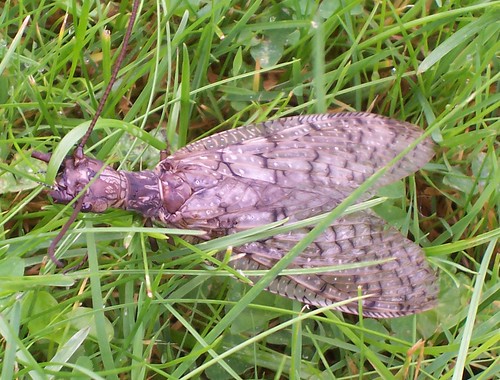
Dobsonflies


This week's post at GeekDad is about the wetlands that used to be our backyard...

Friday, August 28, 2009

Zip Code Zoo


Here's a nature ID site that works by looking at the location of your internet service provider. (Didn't know websites could do that? I use a site called StatCounter to see who's visiting my various blogs. It gives a rough approximation of your city, among other info. And that's just the free, amateur version. Anyway...)

Here's what Zip Code Zoo has to say about itself:

Our natural world is rapidly losing its diversity and abundance. To slow this loss, and to better appreciate the natural world, we must begin with local nature. ZipcodeZoo works to bring the natural world to armchair, amateur, and professional naturalists. Our focus is Applied Biogeography: understanding plants and animals in their place, perhaps even your backyard.

Tuesday, August 25, 2009

Compost Tube - Final Report

This beautiful abstract from early July is the inside of the compost bottle. As you can see, some fungi took hold, along with the nematodes and bacteria that broke our vegetable scraps down into mush. A friend suggested using the liquid which collected in the bottom of the tube as "compost tea," so I poured it on my potted grape tomato plant. After photographing and disassembling the tube, I worked the contents into the tomato pot. (The tomato doesn't look great, but I don't know if that is the fault of the compost!)

Monday, August 10, 2009

Howard Hughes Medical Institute


Another interesting-looking resource for learning about biology is the Howard Hughes Medical Institute website. It has a section called Cool Science for teachers, parents and kids, and you can access free lectures via streaming video or by ordering the free DVDs.